How to Edit a Film Score to Best Serve Your Story

A film score should never exist simply because a scene feels empty without music. Its purpose is to help tell the story—clarifying emotion, shaping rhythm, reinforcing character, and sometimes revealing what the images and dialogue deliberately leave unsaid.

Good score editing is therefore less about finding the most impressive piece of music and more about making the right storytelling decisions: where music begins, where it ends, how it develops, and when it should disappear altogether.

Start With the Story, Not the Track

Before placing music under a scene, identify its dramatic purpose. What changes between the beginning and end of the scene? Whose point of view are we experiencing? What should the audience understand or feel that is not already apparent?

A cue might create tension, suggest an unspoken attraction, connect a present event to an earlier memory, or prepare the audience for an approaching revelation. If you cannot explain what the music is contributing, the scene may not need it.

Avoid using the score merely to announce an emotion the actors have already communicated. Music that tells us a sad scene is sad can feel manipulative or redundant. A more interesting choice may introduce another layer: uneasiness beneath affection, hope within grief, or danger hiding inside an apparently peaceful moment.

Spot the Film Before You Score It

A spotting session is where the director, composer, editor, and music editor determine which moments require music and discuss the function, tone, placement, and duration of each cue. According to Berklee’s overview of music editing, these decisions form the roadmap that guides the score from composition through the final mix.

Do not limit the discussion to where music should begin. Ask where it should stop.

Composer John Paesano has observed that determining where music should not be used can be as important as deciding where it belongs. Silence creates contrast. It can make a performance feel more exposed, allow an uncomfortable moment to remain uncomfortable, or give the next musical entrance greater impact.

A film covered wall-to-wall with score may eventually stop feeling emotional because the audience never has an opportunity to reset.

Choose Entrances and Exits Carefully

The first note of a cue changes how viewers interpret everything that follows. If music enters before a character receives bad news, it may warn the audience that something is wrong. If it begins after the character reacts, it can place us more firmly inside that person’s emotional experience.

Whenever possible, motivate an entrance with a story event: a look, a realization, a camera movement, a location change, or a shift in power. The entrance does not always need to land directly on the action. Allowing the music to arrive a few seconds earlier or later can make it feel less mechanical.

Cue endings deserve equal attention. Music can resolve with the scene, carry across a transition, stop abruptly for shock, or fade before the final image and leave the audience alone with its meaning. Each choice produces a different emotional result.

Cut Musical Phrases, Not Just Audio Files

When shortening or rearranging a cue, listen for its internal structure. Music moves through phrases, chord progressions, rhythmic patterns, and changes in intensity. Cutting solely according to picture timing can produce awkward jumps, incomplete melodies, or resolutions that arrive before the scene has earned them.

Look for natural edit points at the beginning or end of musical phrases. Match compatible rhythms and harmonies, preserve the direction of the cue, and use crossfades carefully. If a scene has been shortened, the goal is not simply to make the track fit the new duration. The music must still feel as though it develops intentionally.

Whenever possible, request stems from the composer. Separate percussion, melody, bass, pads, and orchestral sections provide far more flexibility than a single stereo mix. Stems allow the editor to reduce a distracting element under dialogue, extend an atmospheric texture, or rebuild the cue around a revised scene without destroying its musical logic.

Be Careful With Temporary Music

Temporary scores help filmmakers explore tone and communicate ideas before the original score is complete. They can also become a trap.

After hearing the same temporary track repeatedly, filmmakers may become attached to its exact rhythm, instrumentation, and emotional turns—a phenomenon commonly called “temp love.” The composer is then asked to reproduce the feeling so closely that the original score has little room to establish its own identity.

Use temp music as a conversation starter rather than a blueprint to be copied. Identify what is working in specific terms. Is it the restraint, tempo, texture, harmonic tension, or gradual build? Communicating the function of the temp track gives the composer useful direction without demanding an imitation.

Protect Dialogue and Performance

Music is only one part of the soundtrack. Dialogue, ambience, sound effects, and silence are also telling the story.

A cue that works beautifully by itself may compete with the actor’s voice or overwhelm important environmental sound. Dense arrangements and prominent melodies can be especially distracting beneath dialogue. In those moments, reducing instrumentation or using a simpler section of the cue may be more effective than merely lowering the volume.

The final mix should feel like a conversation among all the soundtrack elements, not a custody battle.

Watch the Film Without Music

One of the best ways to evaluate a score is to temporarily remove it. Does the scene still work? Are the performances and editorial choices carrying the essential drama? If the sequence collapses completely without music, the score may be concealing a problem rather than strengthening the storytelling.

Then restore the cue and ask what changed. Did the scene gain tension, clarity, momentum, or emotional complexity? If the music is only making the sequence louder or more obvious, reconsider the placement.

The most effective film score does not demand attention in every scene. It becomes part of the film’s storytelling language—entering when it has something meaningful to contribute and stepping aside when the story can speak for itself.
Building an Audience for Your Film Before There Is a Film

For independent filmmakers, marketing can no longer begin after the final cut. By then, it may already be too late.

The traditional model assumed that filmmakers made the movie while distributors, publicists, and marketing departments found the audience. That arrangement still exists for some studio projects, but most independent filmmakers enter the marketplace without a major distributor or substantial advertising budget. They are competing against thousands of films, series, videos, and other forms of entertainment for a limited amount of attention.

Today, a filmmaker needs to begin identifying and cultivating an audience while the project is still being developed. This does not mean convincing thousands of strangers to become fans of a movie that does not exist. It means building a community around the filmmaker, the subject, the genre, and the process of bringing the story to life.

Know Who the Film Is For

Saying that your film is “for everyone” is usually another way of saying you have not identified its audience.

Begin by asking who is most likely to care about the story. That audience might be connected by genre, culture, location, profession, identity, personal experience, political issue, hobby, or an existing community surrounding the subject.

A horror film may appeal to genre fans, but its particular setting or mythology could connect it to additional communities. A documentary about a neighborhood is not only for documentary viewers; it may interest former residents, historians, preservation groups, schools, and local organizations.

Audience research should go beyond age, race, and gender. Where do these people gather? What publications, podcasts, organizations, creators, and online communities do they trust? What language do they use when discussing the subject? Most importantly, what would make them feel that this project belongs to them?

Seed&Spark’s filmmaker education resources emphasize that audience development begins with specificity: learning who the audience is, where to find them, and how to communicate with them before launching a campaign.

Build Around the Story’s World

A film project can generate meaningful content long before principal photography.

Share the ideas, people, places, and questions surrounding the story. A period film might explore overlooked history. A music documentary can feature archival discoveries, playlists, and conversations with artists. A science-fiction project can introduce its world, technology, and visual influences. A socially conscious drama can spotlight organizations already working on the issue.

The goal is not to give away the entire plot. It is to invite people into the world of the film.

Concept art, location photographs, research discoveries, director’s notes, short interviews, production diaries, casting announcements, and proof-of-concept scenes can all help an audience understand the project’s identity. This material also provides evidence that the filmmakers are doing the work rather than simply promoting an idea.

The content should offer something of value even to someone who has not yet committed to seeing the eventual film. People rarely follow a project because they want to receive eighteen months of fundraising reminders.

Establish a Direct Line to the Audience

Social media is useful for discovery, but followers on a platform are not the same as an audience you can reliably reach. Algorithms change, accounts are restricted, and platforms come and go with the confidence of small Roman empires.

Create a simple website or landing page that clearly communicates the film’s premise, creative team, current stage, and next objective. Give visitors a reason to join an email list: production updates, early footage, invitations to private screenings, a behind-the-scenes newsletter, or access to special conversations related to the film.

An email list is particularly valuable because it creates a direct connection between the project and its supporters. Track more than follower counts. Look at email sign-ups, responses, event attendance, crowdfunding participation, website visits, and how often supporters share the project with others.

One hundred people who consistently open, respond, attend, donate, and advocate can be more valuable than ten thousand passive followers.

Form Partnerships Before You Need Promotion

Find organizations, businesses, educators, influencers, and community leaders whose existing work intersects naturally with the film. Approach them while the project is developing, not days before a crowdfunding deadline or premiere.

A strong partnership should offer mutual value. A community organization might provide research, introductions, locations, credibility, or access to potential viewers. In return, the film can amplify its work, create educational material, host a discussion, or include the organization in future events.

These relationships can eventually support fundraising, screenings, publicity, and distribution. They can also make the film more informed and authentic.

Treat Crowdfunding as Community Building

Crowdfunding is often presented strictly as a way to raise production money. Its greater long-term value may be the creation of a visible group of people who have chosen to support the film.

As Seed&Spark puts it, crowdfunding should be “audience-building first, fundraising second.” A campaign can test the pitch, reveal which aspects of the story resonate, identify the most engaged supporters, and demonstrate measurable interest to investors and distributors.

Do not disappear once the campaign ends. Continue sharing progress, setbacks, milestones, and meaningful decisions. Supporters who are treated as part of the journey are more likely to become viewers, reviewers, event attendees, and advocates when the film is released.

Make the Audience Part of the Business Plan

An existing audience does not guarantee financing or distribution, but it reduces uncertainty. Producers, investors, grant organizations, and distributors want to know who will care about the finished film and how those people can be reached.

Include an audience-development strategy in the project deck and business plan. Identify the primary and secondary audiences, relevant partnerships, communication channels, existing engagement, content strategy, and possible release pathways. Film Independent recommends treating marketing and distribution plans as ongoing documents that evolve with the project.

The filmmaker’s responsibility is no longer limited to making the film. It includes creating a path between the work and the people most likely to value it.

The good news is that audience building does not require celebrity or a massive advertising budget. It requires clarity, consistency, genuine participation, and enough patience to build relationships before asking those relationships to carry the film.

Your first audience is not merely waiting at the end of production. They can help the film get made—and may become the reason it gets seen.

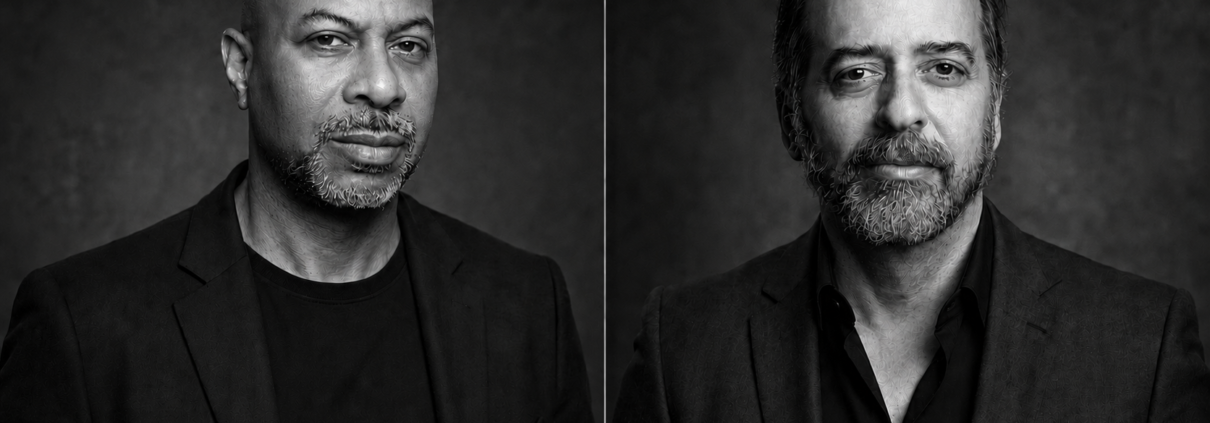
CoMP—Conversations on Media Production—began as a live seminar series in New York City’s West Village. Created by longtime collaborators Adonis Tsilimparis and Darren E. Johnson, the events brought accomplished professionals together with working and emerging creatives for candid conversations about the art and business of film, television, and music. Guests shared practical lessons drawn from their careers before taking questions directly from the audience. That live exchange became the heart of the CoMP experience.

The original series was eventually placed on hold when Adonis relocated to Los Angeles and Darren moved to Miami, followed soon afterward by the pandemic. After quarantine, CoMP experimented with several networking events in Los Angeles. Although successful, they never quite recreated the intimacy and educational impact of the original New York seminars.

In 2026, Adonis and Darren recognized that the same technology that had transformed the media industries could also bring CoMP’s original mission to a much wider audience. The series was relaunched as CoMP Webinars, using Zoom and Eventbrite to connect experienced professionals with creatives around the world—while preserving the element that mattered most: meaningful, live Q&A between guests and attendees.

Each conversation now begins as an interactive live event and continues as an educational resource. Highlights and excerpts are shared on YouTube, while complete recorded sessions are available on Patreon and Substack for on-demand viewing. The setting has evolved from a room in the West Village to a global digital stage, but the purpose remains the same: connecting experience, inspiring creativity, and helping people build sustainable careers in media.